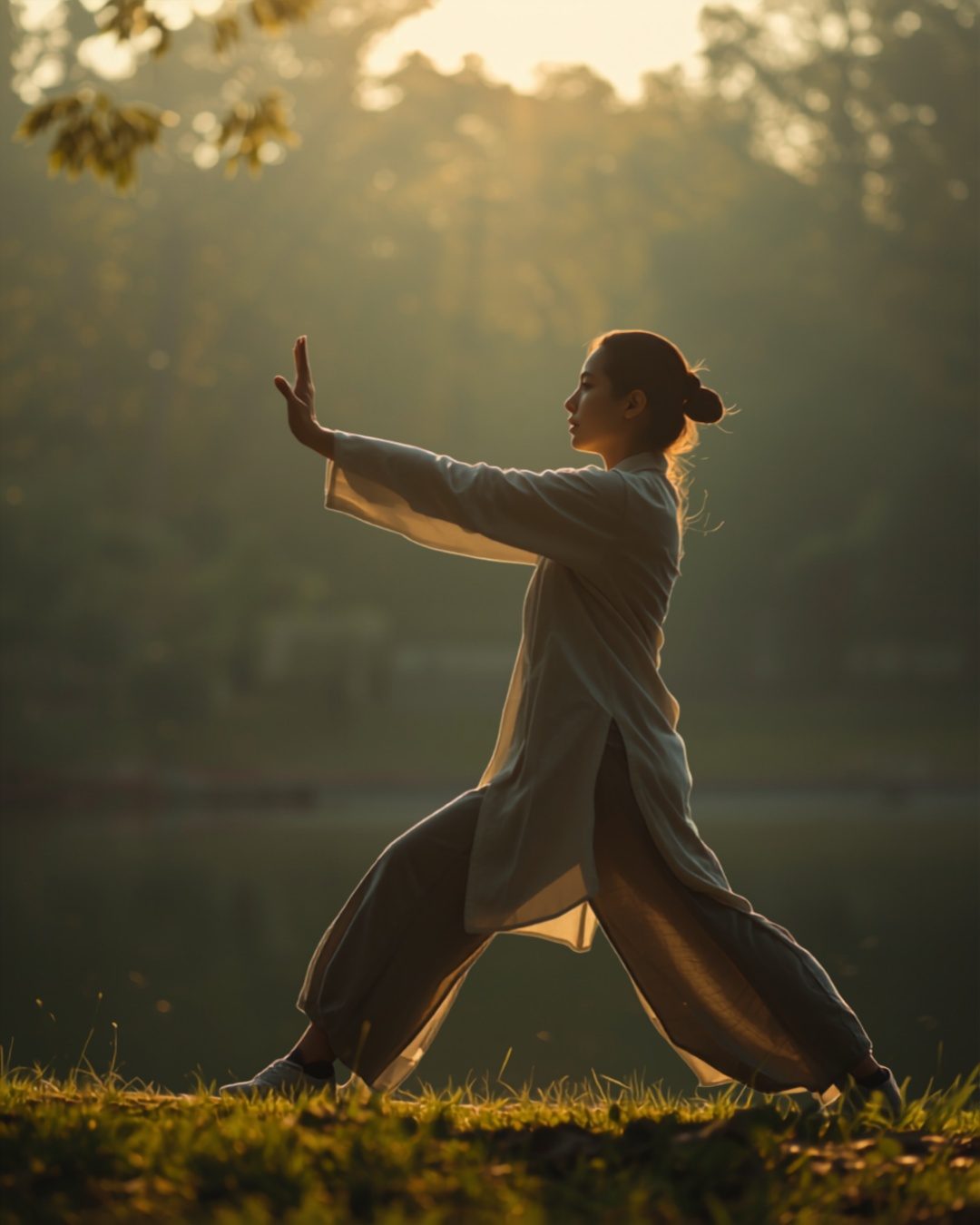
There's a scene that plays out in parks every morning: a small group moving almost in slow motion, arms tracing circles through the air, breath setting the pace. From the outside, it can look like nothing much is happening. From the inside, quite a lot is.
Tai chi carries centuries of tradition, but you don't need to know any of that history to start. You just need a small patch of space and the willingness to move without rushing, which, for a lot of women, is the harder part.
It still counts, even without the sweat
There's a quiet belief that exercise only "counts" if it leaves you exhausted. Tai chi pushes back on that from the ground up. In a 12-week trial of 50 healthy but stressed adults, tai chi lowered anxiety about as well as conventional exercise, and both did better than simply waiting. It is a small study, but it supports a hopeful idea: gentle movement, breath, and meditation together can count as real care for your body and mind.
Other research has looked at cortisol, the hormone your body releases under stress. One early study measured it before and after a tai chi session and found it was lower afterward. That is a single study from 1989, so we hold it loosely, but it points to something measurable, not only a feeling of calm.
What it does for your body, beyond the calm
Tai chi trains balance and stability in a way few other movements do, because every posture asks you to hold your own weight consciously, without momentum or support to lean on. In older adults living at home, a large Cochrane review found that tai chi lowered the number of people who fall by about 20%. That matters more, not less, as the years go on.
It may also help you sleep. A 2024 review of 12 trials in older adults found that tai chi improved sleep quality. Those studies involved older adults, so treat the result as encouraging rather than certain for every woman. And unlike most exercise routines, tai chi is accessible to nearly any body: low-impact, no equipment, no steep learning curve.
The bridge between body and mind
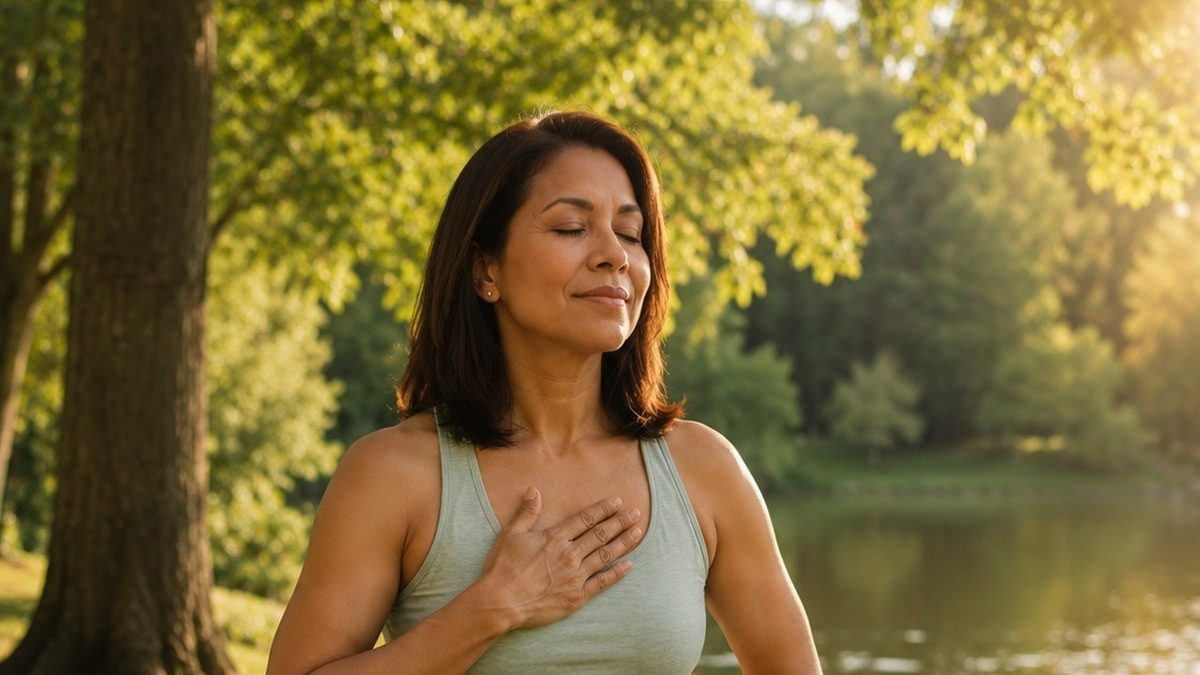
This is what sets tai chi apart from a brisk walk or a cardio routine: it never separates body from mind during the practice itself. Every movement comes paired with breath and attention, so you end up working both at once, instead of treating "exercise" and "mindfulness" as two separate things competing for your time.
For a woman who already feels like there aren't enough hours in the day, that combination isn't a small detail. It's time that quietly does double duty.
It's not a diet or one more routine. It's a balance your body already knows, and can find again, if you give it the chance.
Starting without it feeling like one more obligation
You don't need a free hour or a studio. Ten or fifteen minutes, in a space as simple as a hallway or a corner of the yard, is a good place to start. Many people say sleep and stress ease first, with strength and posture following as consistency builds, though everyone moves at her own pace.
Tai chi doesn't ask you to report back on how much progress you made today. It just asks you to show up, a little, with breath and body working together. And for a lot of women who've spent years putting themselves last on the list, that alone is already an act of care.
It's not a diet or one more routine. It's a balance your body already knows, and can find again, if you give it the chance.